Marc J. Saugey, Architect*
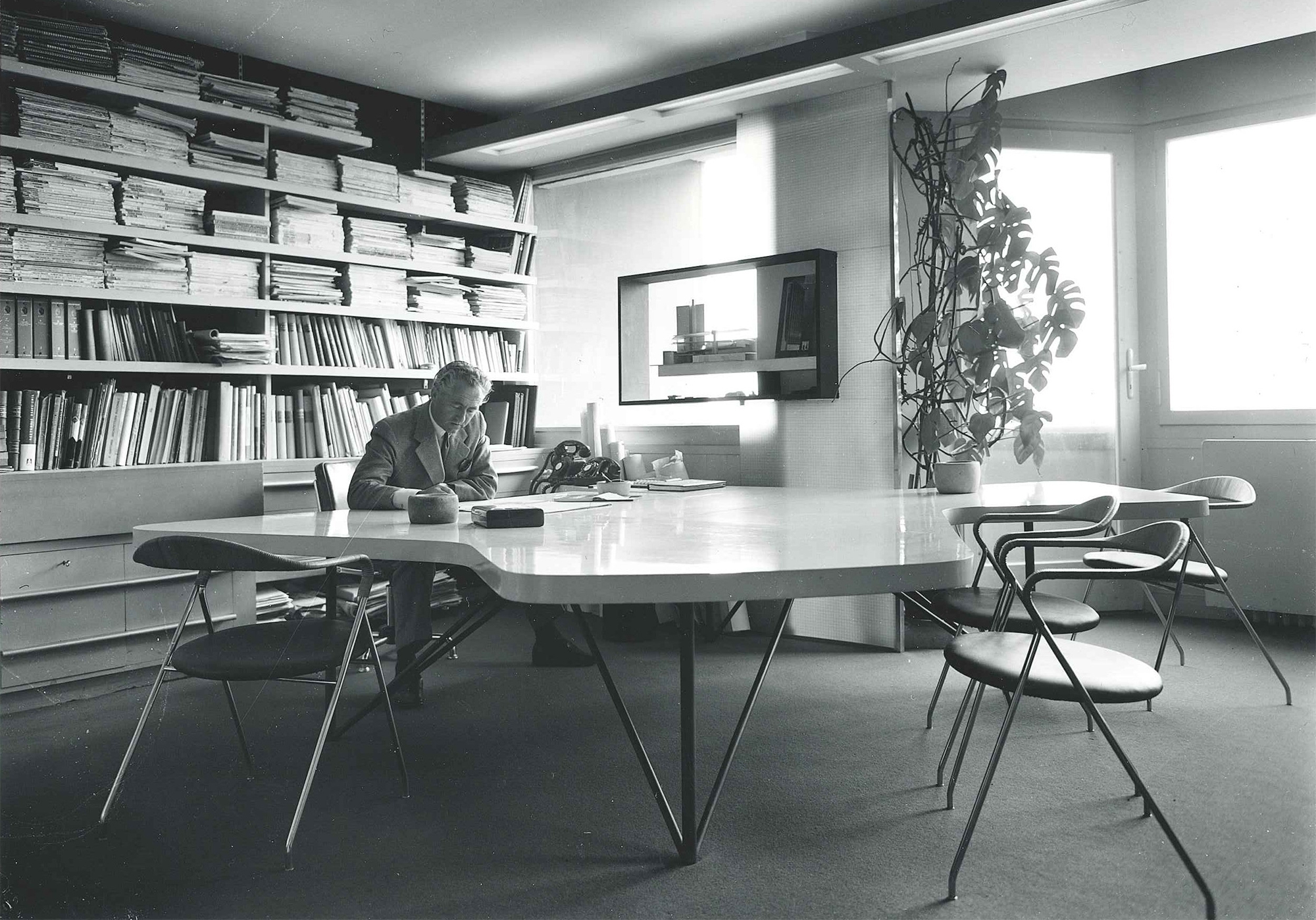
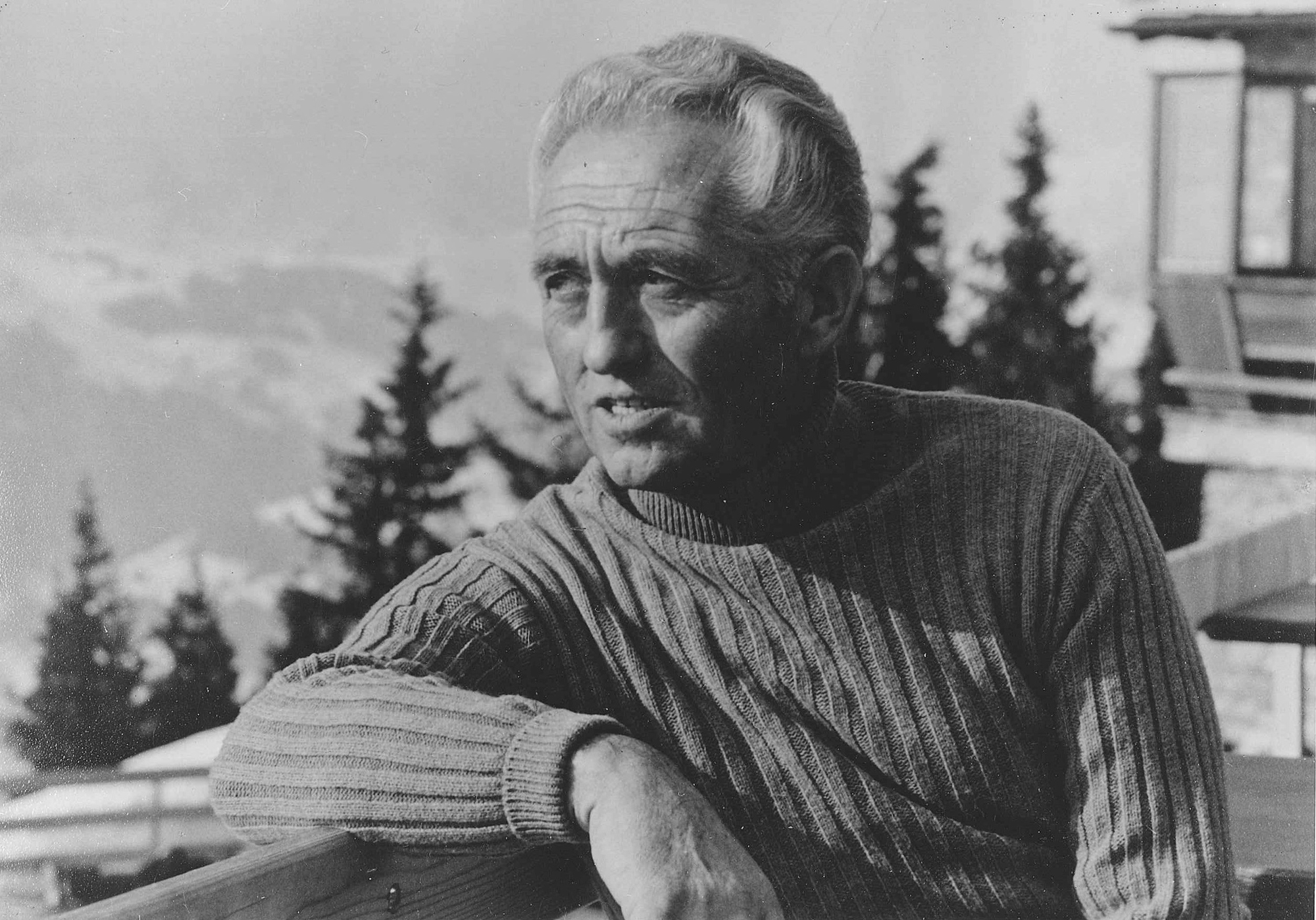
Born near Geneva in 1908, Marc J. Saugey was a leading figure in architecture and urban planning, responsible for some of the most modern architectural achievements in postwar Geneva. After studying at the Technicum, he became a member in 1931 of GANG (Groupe pour l’Architecture Nouvelle à Genève — Group for New Architecture in Geneva) and opened his architectural practice in 1941 on Quai Gustave-Ador, later moving to Boulevard Helvétique in the Tour de Rive. This building already challenged prevailing urban-planning standards with its vertical scale.
In 1956, together with Alberto Sartoris and Anthony Krafft, he founded the journal Architecture, formes + fonctions. He also taught at the School of Architecture of the University of Geneva from 1961 to 1970, alongside his work on the Urban Planning Commission. He passed away in January 1971.
Main sources:
Catherine Dumont d’Ayot, Marc J. Saugey, L’espace, la ville et les affaires, doctoral thesis, 2014.
Catherine Courtiau, Les cinémas de Marc J. Saugey, La Couleur des Jours, no. 36.
Landmarks in Geneva’s Urban Landscape
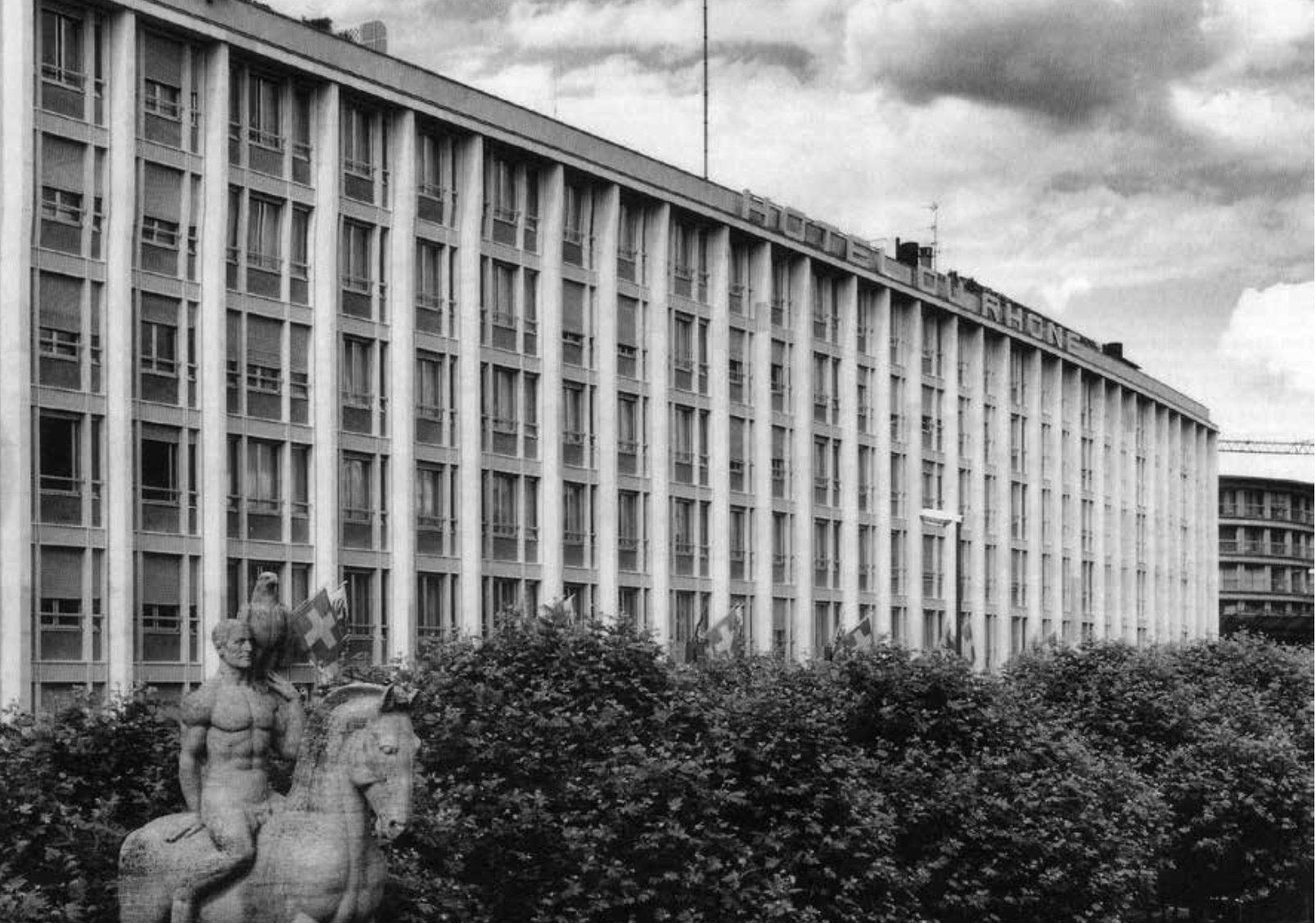
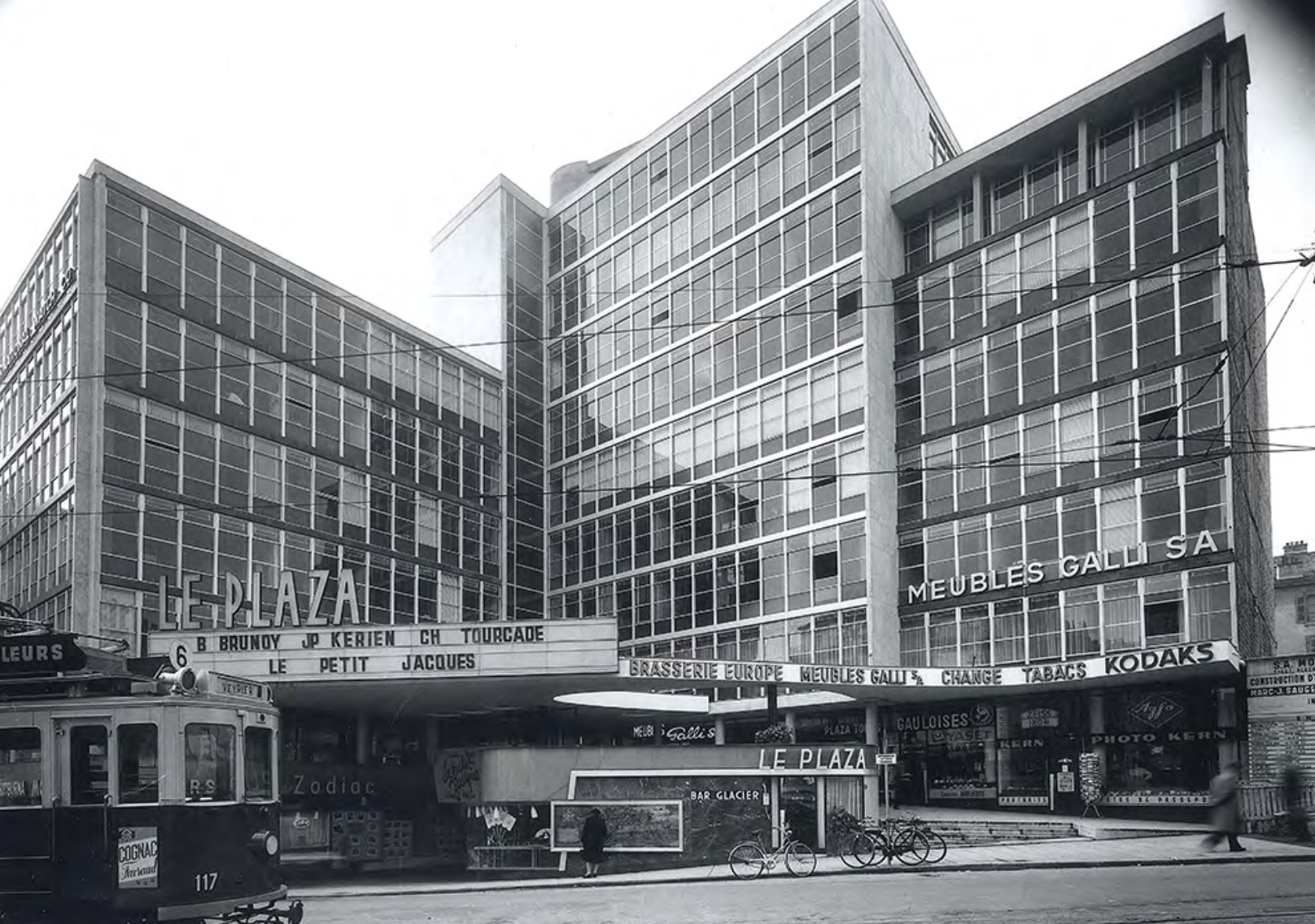
One of Marc J. Saugey’s first major projects was the Hôtel du Rhône (1947–1950), now the Mandarin Oriental on Quai Turrettini. Between 1951 and 1957, he went on to design four commercial buildings in Geneva: the Mont-Blanc Centre, home to the Plaza cinema, and three other complexes—Terreaux-Cornavin, Cité Confédération, and Gare-Centre—united by a shared principle of multifunctionality.
A talented developer, Saugey succeeded in reducing both construction costs and building time. He also made a significant contribution to the design of private spaces. In 1938, he had the Tour de Rive built—an iconic lookout on the edge of the Old Town—where he later occupied the top floors, combining residence and office space. It was the view over the lake from this tower that later inspired, for the 1964 Swiss National Exhibition in Lausanne, the design of the harbor, with its sails transformed into tents of varying shapes and sizes.
A masterpiece among his residential projects, Miremont-le-Crêt stands as the manifesto of what he called “habitable space”: private space conceived as a complement to the space of the city. Designed to reflect contemporary ways of living—balancing retreat and interaction—the home was to be rational, flexible, fluid, and open, minimizing unnecessary partitions.
Saugey and Cinema
Always attentive to the latest innovations, Saugey was deeply engaged with the remarkable evolution of film projection in his time. He took part in the design of several “newsreel cinemas,” venues that screened news continuously: in 1936, Cinébref in Nantes, followed in Geneva by the Roxy and Elysée theaters—the latter featuring a ceiling evoking the movement of waves—as well as the ovoid auditorium of Cité-Confédération.
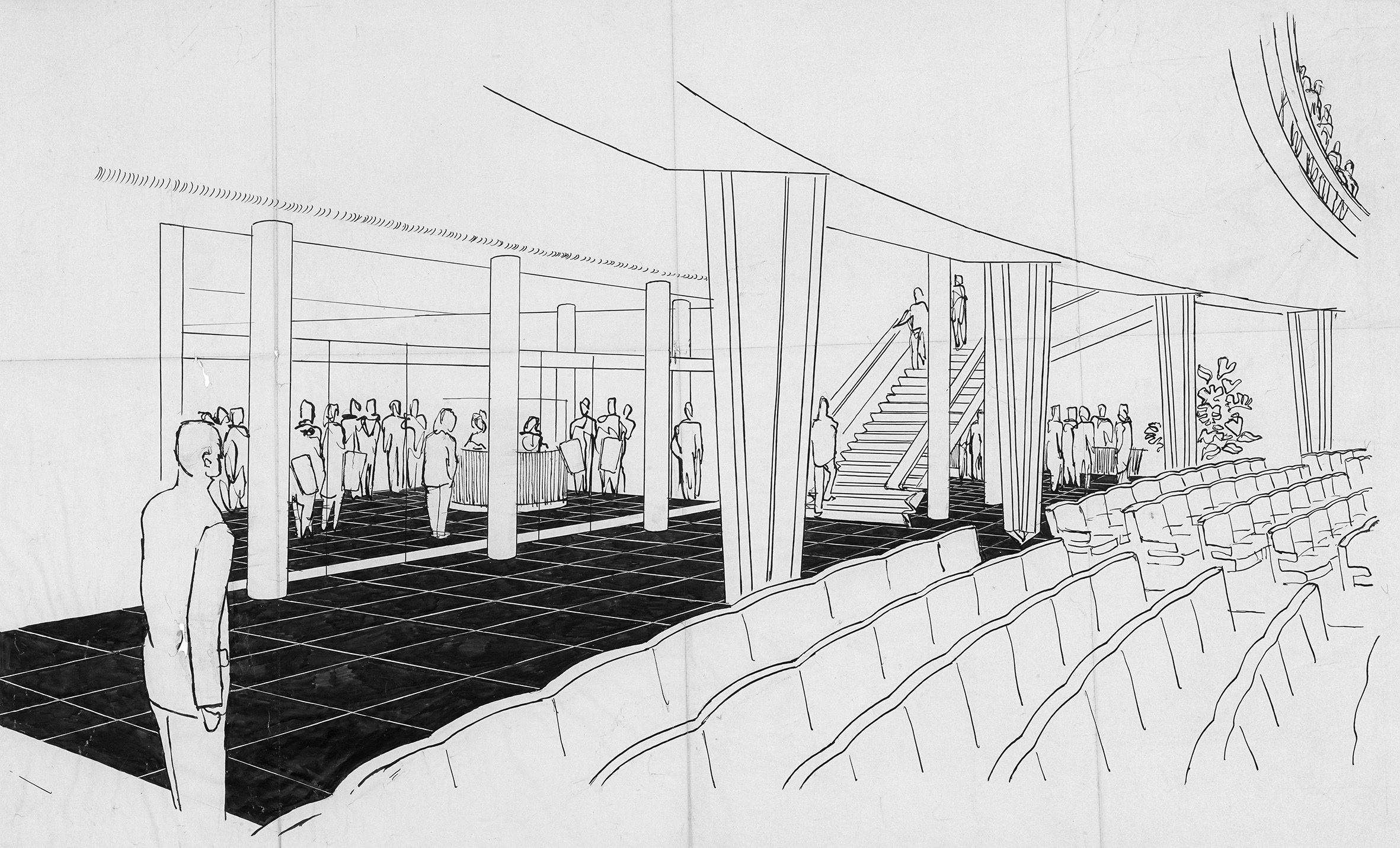
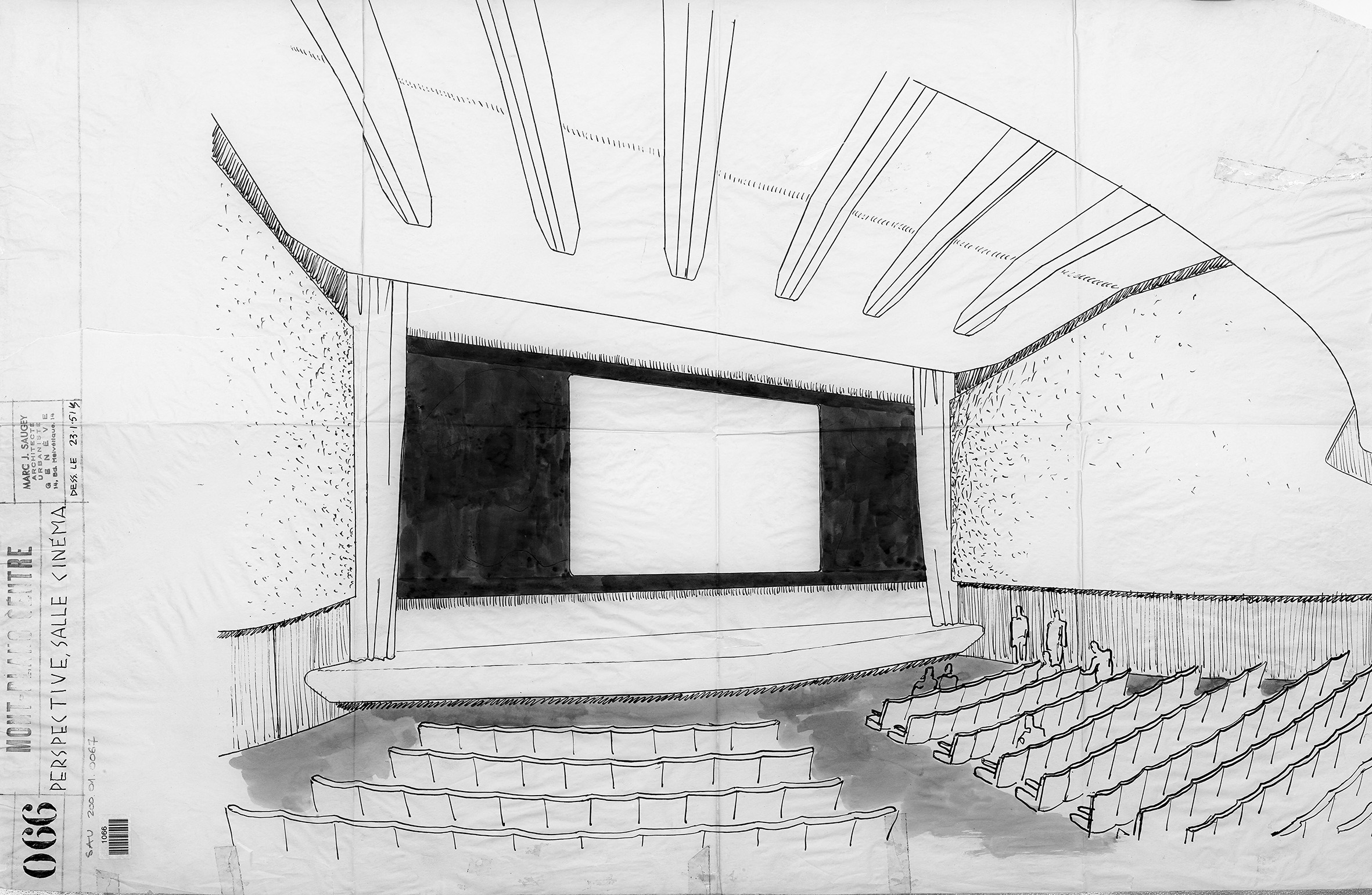
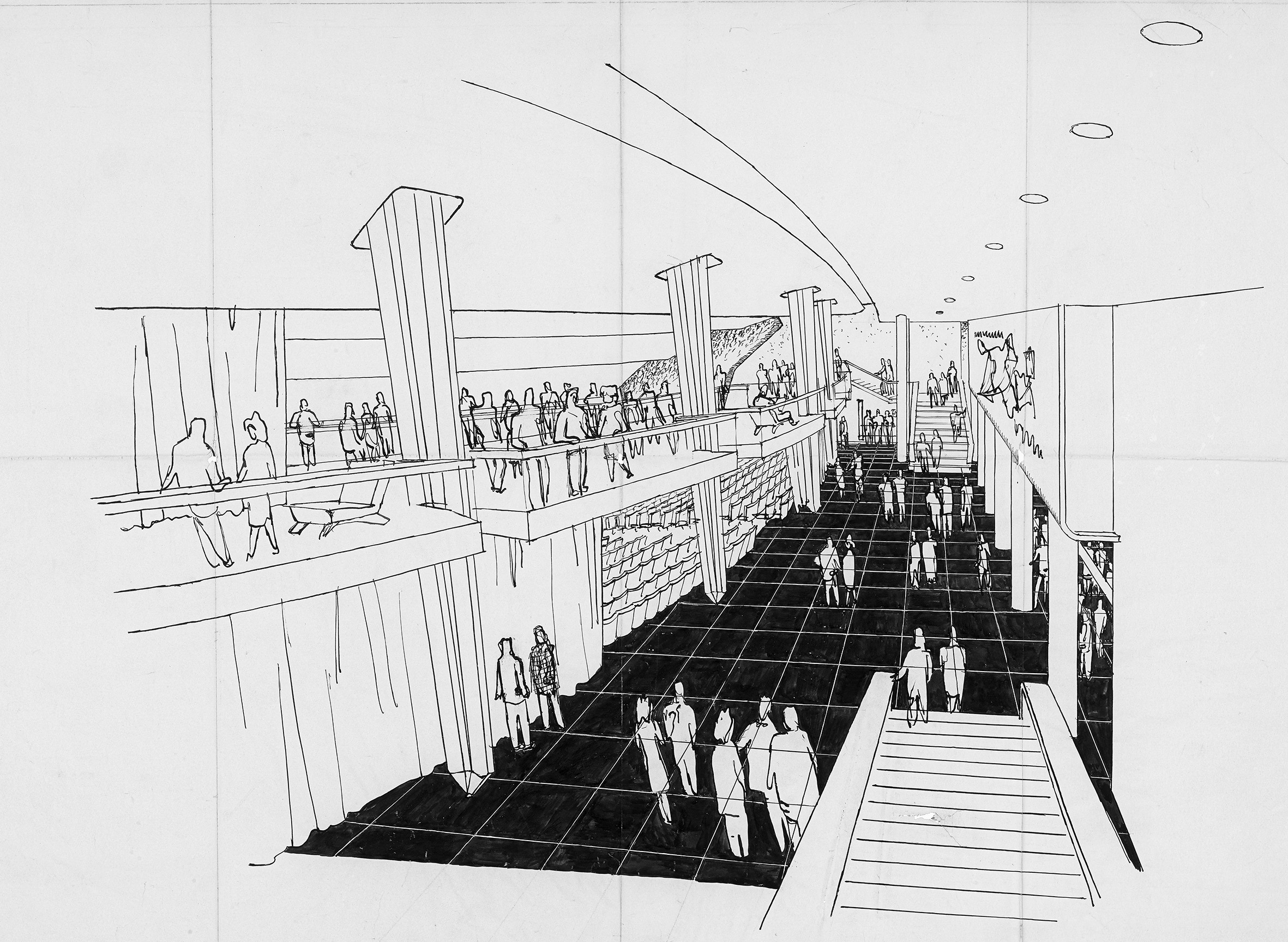
After the opening of the Plaza in December 1952, his second cinema dedicated to feature-film screenings was the Auditorium Fondation Arditi, inaugurated in October 1957 under the name “Paris.” By concealing its load-bearing structures behind receding walls and soaring ramps, he created an illusion of escape—a kind of weightless bubble cut off from the outside world—further enhanced by its location nine meters below street level. That same year, in December, Saugey also opened the “Star” cinema, embedded in the Gare-Centre complex, which was demolished along with it in 1987.
Saugey’s Architectural Language
Flexible and organic, Saugey’s buildings can accommodate a wide range of functions—offices as well as neighborhood shops, a cinema, a restaurant or bar, and even housing.
Marc J. Saugey left a lasting mark on the city through his interventions. Inspired by American architecture, his complexes are often recognizable by their curtain-wall façades. The passageways, shop windows, and ramps—hallmarks of his work—have also shaped the urban landscape and the everyday lives of Geneva’s residents.
“Saugey develops specific strategies to engage and guide the public, leading them into buildings by creating effective and spectacular stagings.”
— Catherine Dumont d’Ayot, in Tracés (5–6, 2020)
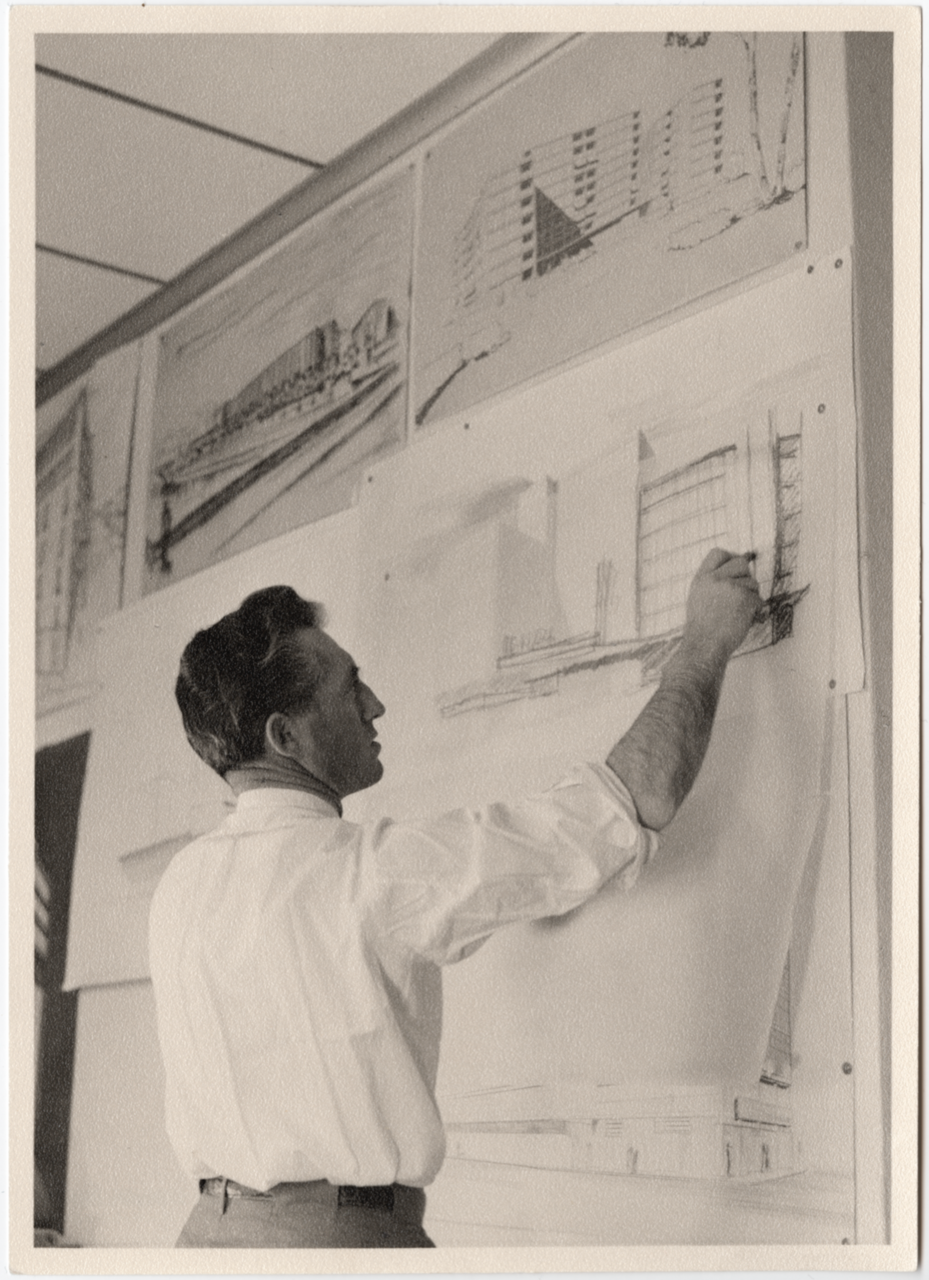
Below: The perspectives of the foyer and the auditorium were drawn by Louis Bongard, an artist who created several mural frescoes for Marc J. Saugey’s buildings.